Tuesday, 15 January 2013

Notes from Eve Abbey ~ January 2013


I had to be very strong to read an amazing book written by a Sudanese refugee. It is called Beneath the Darkening Sky by Majok Tulba, who was unable to read or write, even in his own language, when he arrived in Australia as a teenage refugee. He has said that the story of the African child soldiers needs to be told, and it is a horrifying story, but added to this is the description of the lawless, violent rebel soldiers. Not good news. His description of the treatment of child soldiers (who were taken so long as they were as tall as an AK47 rifle) breaks your heart, but you must admire his clear, simple, effective prose. It is worth the stress to read this book. Tulba has also made films and is writing another book. Congratulations to him.

Beneath the Darkening Sky by Majok Tulba Alek: The Extraordinary Life of a Sudanese Refugee by Alek Wek  Desert Flower by Waris Dirie  A Fortunate Life by A.B. Facey

I read and enjoyed another book about African refugees - Alek: The Extraordinary Life of a Sudanese Refugee by Alek Wek, who was born in a village in South Sudan, yet became a famous supermodel. She tells the story of her childhood in a most unaffected, simple way, describing their small comforts and daily ritual with some pride, despite their poor circumstances. Her account of her family’s first flight across the arid countryside away from Wau, the small township where they lived, when rebel soldiers attacked, is most moving and a real eye-opener. She describes how her mother always boiled any water they were able to find before letting the children drink. Such discipline! No wonder they survived. Alek eventually managed to get on a flight to London, where her sister was already living, and her good life story eventually begins. Nothing was easy and, although she had modelling jobs, she still cleaned toilets at the BBC and worked in a salon washing old ladies’ hair. Her description of the ins and outs of modelling could be salutary for teenaged dreamers. This is an inspirational story and would be a good gift to young people – in fact it should be in every school library. Firstly to explain the story of refugees, and secondly to illustrate how beneficial hard work, discipline and tolerance can be. An intelligent, confident, strong voice comes through. Alek also mentions the very popular 1998 book Desert Flower by Ethiopian refugee Waris Dirie, another beautiful young woman with a different story to tell about escaping a forced marriage. You’ll find them both in biography.

Beneath the Darkening Sky brings to mind another book by a so-called uneducated person, A B Facey’s A Fortunate Life. Facey was born in 1894 and left school at eight, yet he produced an Australian classic, describing his working childhood on sheep farms, his experiences at Gallipoli and later raising a family during the Great Depression. I remember Nancy Keesing, who saw the original manuscript, telling me there was hardly an alteration made. There are Puffin editions of this book for younger readers and I believe an audio book will soon be available. Everyone should read this book!

This is a good moment to remind you we have a most interesting African History section, ranging from Nelson Mandela’s famous autobiography Long Walk to Freedom to Libya: The Rise and Fall of Qaddafi by Alison Pargeter or Dancing in the Glory of Monsters: The Collapse of the Congo and the Great War of Africa by Jason Stearns, a long-time worker and researcher on Africa and a member of the UN Panel investigating Congolese rebel groups, which is a very topical subject. The New York Times recently described a leaderless group of mercenaries who were left behind in Somalia with plenty of weapons, but no purpose.

Long Walk to Freedom by Nelson Mandela Libya: The Rise and Fall of Qaddafi by Alison Pargeter   Dancing in the Glory of Monsters: The Collapse of the Congo and the Great War of Africa by Jason Stearns 

It was more fun to read the latest book by Emily Maguire, who turns out to be a writer worth following. I haven’t read any of her earlier books, but will make sure to read some now. The new book is called Fishing for Tigers and is set in the beautiful city of Hanoi. It seems there is something special about Hanoi. Many books have been set there and many writers seem to return there. In this novel, a thirtyish young woman - an Australian who left home as a teenager to marry an American (who turned out to be abusive) - is living alone and safe in Hanoi. Her friends are a group of hard-drinking expatriates. She finds herself sexually attracted to the half-Australian half-Vietnamese son of one of her friends who has come to visit his dad, and the young man admires her cool detachment. This is a good story, contrasting the young man’s idealism with her attempts to find peace and reason in a war-torn country. The denouement is quite satisfactory. I wondered about this. If you are suffering withdrawal from the erotic fiction of Fifty Shades of Grey, you may prefer to read this, which is so much better written!

Emily Maguire’s other books are Taming the Beast, in which the heroine is seduced by her English teacher, The Gospel According to Luke, which is about the conflicts between a religious sect and a sexual health counsellor among Sydney’s rebellious youth, and Smoke in the Room, about three idealistic activists holed up in a room in Newtown pondering life’s questions. She has also written two non-fiction books, Your Skirt’s Too Short: Sex, Power and Choice and Princesses and Pornstars. Here’s an intelligent writer with plenty to say and the ability to say it well. Seek out her books.


Fishing for Tigers by Emily Maguire Taming the Beast by Emily Maguire  The Gospel According to Luke by Emily Maguire Smoke in the Room by Emily Maguire
Your Skirt's Too Short: Sex Power Choice by Emily Maguire Princesses and Pornstars: Sex Power Identity by Emily Maguire

J K Rowling's latest book, the one that is not about Harry Potter, and is deemed by some people not to be suitable for children, is called The Casual Vacancy and is indeed a dark book following the lives of many people in a ‘typical’ English village, complete with run-down housing for the poor on the outskirts. There are many characters jostling for position on the Parish Council and none of them are especially likeable. The adolescents are most successfully depicted, unhappy lot that they are, and although there is a rape and a suicide, I don’t think reading about them would harm any contemporary reader. A very young reader would not bother. A long story, all neatly tied up at the end by a good story-teller.


The Casual Vacancy by J K Rowling Joseph Anton by Salman Rushdie

Salman Rushdie’s autobiography Joseph Anton, dealing mostly with his life during the time of the fatwa that was placed upon him by Iranian leader Ayatollah Khomeini, is a very readable account. He has written it in the third person, which was an excellent idea. We would have got tired of I, I and I again! But as he refers to himself as “he”, he is able to express much more of his feelings and actions. Abbey’s gets a mention on page 170 as one of the bookshops throughout the world that was firebombed for continuing to sell The Satanic Verses, which I guess is one of those books, like A Brief History of Time by Stephen Hawking, which many people bought, but did not finish! The name Joseph Anton is derived from the first names of two of Rushdie’s favourite authors – Joseph Conrad and Anton Chekhov – and of course you can buy all of their books here at Abbey’s, usually in the various classics series.


Keep well, Eve

Thursday, 18 October 2012

L.A. Larkin quenches our thirst for knowledge about THIRST


I read L A Larkin's new novel, THIRST, whilst on holiday in the snow, which was the perfect place to read a novel set in Antarctica. But if you're buying this for that lazy summer read by the pool, just throw a few more ice cubes into your drink!

L A Larkin came into Abbey's looking resplendent in a smart red jacket and whilst she worked her way through signing a pile of her book, I asked her a few questions about it.


Can you tell me how you'd describe the story of THIRST?

Well, it's a fast-paced thriller set in Antarctica, with a maverick glaciologist hunted by killers who must survive long enough to stop a global catastrophe.

How did you settle on Antarctica as the place where your thriller would play out?

Antarctica is a great location for a thriller because it is so isolated. It’s easy to ramp up the pressure on the hero. Because the climate is so severe, simply staying alive is a challenge. Antarctica also has positive associations with heroism and courage. But most important of all, the disaster that Luke Searle - the hero - must prevent could only happen in Antarctica.

Yes and you're dealing with some pretty big environmental and political themes here and it's obvious that there has been a large amount of research underlying the story. How did you go about that?

I went to Antarctica on a former Russian oceanographic research vessel to be awoken every morning by the Russian captain barking instructions to his crew through the PA system. It was like waking to find myself in a James Bond story: turbulent seas, glaciers the size of small countries, and abandoned stations eerily left as if the inhabitants would return at any moment. Spending time in Antarctica helped me understand the isolation, the extreme cold and the dangers, such as hidden crevasses and blizzards, and enabled me to describe with authenticity the beautiful and terrifying world that Luke inhabits. I interviewed many people at the Australian Antarctic Division and learned about crevasse rescue, polar survival and polar medicine and also flew to the UK to interview scientists at the British Antarctic Survey who have been to the real Pine Island Glacier.

Your work actually sounds like fantastic fun, although very challenging too. Now, were your characters inspired by anyone in particular?

I wanted my characters to be well-rounded and complex. The hero is far from perfect and I hope that by the end of THIRST the reader at least understands why the adversary does such terrible things. Luke Searle is a reluctant hero who ultimately becomes Antarctica’s champion and his passion for Antarctica was inspired by an Australian I met in Antarctica. To create the Maddie Wildman character, I interviewed one of Australia’s first female station leaders.

I found the villain quite repugnant, all the same. Will there be another Antarctic thriller by L.A. Larkin?

Oh yes. I am working on a second Antarctic thriller and have planned the third.

And how do you feel about THIRST being described by James Phelan as ‘The best Antarctic thriller since Ice Station’?

Thrilled!

Thanks for coming in to Abbey's to sign some of the first copies and tell us about THIRST.

My pleasure.

(smiles and group hugs)

Craig Kirchner


--------------000--------------

Abbey's Bookseller Review

THIRST is the perfect book for those wet days when you don't want to go outside; or for when you don't want to talk to the stranger beside you on your long distance flight; or just any occasion when you want to immerse yourself in something slightly implausible but nonetheless guiltily enjoyable!

Luke Searle is a glaciologist overwintering again on the Australian Antarctic base at Hope Station. Two team members die in what seems a tragic accident, until the base is deliberately sabotaged and Luke and his station leader, Maddie Wildman, are the only survivors. Meanwhile, a corrupt Chinese general and his son are about to blow up one of the glaciers in order to transport ice to China, where fresh water is in desperately short supply. 

And a Chinese tailor is murdered in Sydney: how does this all tie in? Alternating points of view give the narrative a great deal of pace, as the clock ticks down to the crucial time, and the goodies race the baddies to the end - as does the reader! Does have a bit of an environmental message, but that takes a distant second place to the entertainment factor, so give THIRST to any reader who just wants to lose themselves in an exciting but undemanding read!

Lindy Jones

You can find THIRST by L A Larkin at abbeys.com.au or at 131 York Street Sydney.


Wednesday, 26 September 2012

Notes from Eve Abbey ~ October 2012

 ABBEYS.com.au

I've rediscovered a famous book. What is it? None other than the 43rd edition of Yates Garden Guide, celebrating 124 years in Australia. And what a splendid edition it is! Over 500 pages including index. The usual information is supplemented by a pictorial history of the Yates company and a resume history of Australian gardening. Did you know Yates began in Manchester in 1826, but in 1879 one of the sons went to New Zealand for his health? Arthur began the first Yates store in Auckland in 1883. He appointed an agent in Australia in 1886, and by 1887 had leased premises in Sussex Street. Another brother later moved to New Zealand to take over, so Arthur moved to Sydney to continue their progress as one of the most well-known companies in the Pacific. This book would make a good Christmas present, even to someone who already has a copy. It would be fun to compare the changes over the years.

I have been a long-time fan of Irish writer John Banville, well before he won the Man Booker Prize for The Sea, but I was disappointed with his latest novel, Ancient Light. The opening line is: "Billy Gray was my best friend and I fell in love with his mother." I think this could be a contender for most memorable opening line, don't you? The blurb says "dazzling and funny", but I didn't appreciate the joke, well, not until the denouement. Yes, it was about a love affair between a fifteen-year-old boy and a mid-thirties woman in a small Irish town. The story is recollected in later years by the boy, who has since become a famous actor. Too many complications and sidetracks for me, although a number of other people at Abbey's enjoyed it and I admit it is lovely writing. See what you think.


Good news that Gabrielle Lord won the Ned Kelly Lifetime Achievement Award for her crime thrillers. She has a long series of thrillers for young adults under the title Conspiracy: followed by a month of the year. Look for her books in Australian crime and the children's section.


I was watching an Agatha Christie story on TV the other night and really felt it had departed from the original story quite a lot. Have you ever felt the same? Abbey's always has the complete range of Agatha Christie in stock so you can always compare if you feel so inclined.


I have read a biography of the famous Polish reporter Ryszard Kapuscinski (when I was working in the shop I always had to ask Lindy how to spell his name!) called Ryszard Kapuscinski: A Life by Artur Domoslawski who, you can see, is yet another Polish reporter. This was not an entirely successful thing to do. At first it seemed the author didn't approve of Kapuscinski. He spent an awful lot of time showing that Kapuscinski had actually elaborated some of his stories. Heaven forbid! It wasn't until almost the end that he conceded that the material Kapuscinski produced was literature, rather than reportage. The best parts in the book are quotations from Kapuscinski. A lot of time is also spent on the ins and outs of Kapuscinski's membership of Communist committees. However, I guess this is relevant as, unless he was ‘in favour' with the government', he would not have been allowed to travel so often, and for so long, to Africa and South America and elsewhere.

It was not until The Emperor: Downfall of an Autocrat was published in America that Kapuscinski's international fame began. I read The Emperor as a fable about the fall of Haile Selassi of Ethiopia, whereas the biographer shows this to be a veiled critique of the Polish government. In his last book, Travels with Herodotus, Kapuscinski recollects his many voyages, when he always carried Herodotus with him. This time, Herodotus is definitely part of the action as Kapuscinski interprets the Herodotus stories for us and often quotes him in full. I like this quote from the cover: "Few have written more beautifully of unspeakable things. Few have his courage, almost none have his talent", which is from Tom Bissell of The Scotsman. I do think his translators deserve recognition for the gorgeous prose they deliver up.

Some of Kapuscinski's other books are The Soccer War, which is not only about soccer but about revolutions and the tiresome practicalities endured to get there; Shah of Shahs depicts the final years of the Shah of Iran and analyses the effects of revolution and fear in that country; Imperium is about Russia, Big Russia, until its breakdown after Perestroika; The Shadow of the Sun in Popular Penguins is a selection of his journalism between 1945 and 2000; Another Day of Life is about his travels in Angola just after independence when the whole country was collapsing into civil war. Students of journalism will be interested in Domoslawski's own comments on journalism.


Coincidentally, there is another book called The Man Who Invented History: Travels with Herodotus by Justin Marozzi. This is rather apt as the blurb calls Herodotus a mix of learned professor and tabloid journalist, which can just as easily be applied to the inimitable Kapuscinski... Another journalist whose work is something more than reportage is Australian reporter Alan Moorehead. We have three of his books in stock: The Blue Nile, The White Nile and The Villa Diana: Travels in post-war Italy. Recommended.


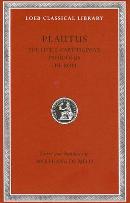
Remember that Abbey's stocks all the Penguin Black Classics, so you can buy your own copy of Herodotus: The Histories and maybe also Plautus, who has been quoted lately by Professor Mary Beard as she enthuses about ancient Rome on SBS TV. The Rope and Other Plays is in the Penguin Classics, while The Little Carthaginian, Pseudolos and The Rope is in the Loeb Classic Library dual-language edition.


For more information about any of the titles I’ve mentioned here, remember to just click on the title!

Keep well, Eve

Friday, 31 August 2012

Notes from Eve Abbey ~ September 2012


Last month Greg Sheridan wrote a nice piece in the Australian Weekend Review declaring that George Eliot’s Middlemarch was the perfect novel, imploring you to read it before you die. Good Advice. We have four editions in stock – three in paperback (Penguin Black Classic, Oxford World’s Classic and Vintage Classic) and a hardback Everyman Library edition – so if you are going to take his advice you can buy a copy for as little as $9.95. This is one of the treasures of Abbey’s – our huge run of Classics which are in stock all the time. Such a great place for browsing.

I want to remind you of two important poetry editions. First, The Complete Poems of Philip Larkin, which is 768 pages in hardback, published by Faber. Remember “Complete” means it has those new poems published since the Collected Edition. And also Rosemary Dobson – The Collected Poems published by University Queensland Press in paperback.

Philip Roth’s The Ghost Writer, first published in 1979, had a sudden surge in popularity and I discovered this was because Jeffrey Eugenides (author of Middlesex and The Virgin Suicides) took it to the First Tuesday Book Club in June as his favourite book. It’s a long time since I first read the wonderful books of Philip Roth and it took me a moment to appreciate how fiercely funny and sadly cruel was this view of a talented, idealistic young Jewish writer sitting at the feet of a master!

Roth may be an acquired taste and, like all acquired tastes, can be too much in one sitting. I was glad The Ghost Writer was only 180 pages! Nonetheless I’ll soon be reading the rest of the Zuckerman trilogy – Zuckerman Unbound, The Anatomy Lesson and The Prague Orgy. You would need to special order these titles as they are only available on indent, which means the local distributor does not keep stock. You can get a hardback copy of all four titles (I know, I know, it is called a trilogy, but it also has an epilogue) called Zuckerman Bound. Roth is the only living American writer whose work is being issued in hardback by the Library of America in what is called A Definitive Edition. Probably his most famous book, American Pastoral, is available as a Vintage Classic and is much easier to find. A great writer, but not an easy man to live with. I remember reading Claire Bloom’s memoir Leaving the Doll’s House (now out of print) in which she told of the psychological horrors experienced during her marriage to Roth.

Some especially good news in the world of prizes - Gillian Mears’ wonderful book Foal’s Bread won the Prime Minister’s Literary Award, Favel Parrott’s Past the Shallows, which was on several shortlists, won the Dobbie Encouragement Award and Gail Jones’ Five Bells won the Nita B Kibble Literary Award. I recommend all three of these books, especially Gail Jones, who has just missed out on several Miles Franklin Awards. Look for her other books, Sorry and Sixty Lights and Dreams of Speaking.

Margaret Mahy, New Zealand author of many, many loved books for children, has died. Lindy tells me the Margaret Mahy Treasury and the Great Piratical Rumbustification (with illustrations by Quentin Blake) are two of her most popular. Lindy is never far away from her famous Children’s section in the far corner of Abbey’s, ready to give you good advice if you need it.

Fremantle Press are publishing more Australian fiction and have sent me a copy of If I Should Lose You by Natasha Lester, one of their emerging writers. This is a beautifully written story with an unusual setting, although perhaps not for everyone. Camille is a young mother whose first child has a chronic illness and is awaiting a liver transplant. Camille herself is a nurse who specialises in supporting families trying to decide whether to donate the organs of dying relatives. Her own mother, who died when Camille was very young, was a famous transplant surgeon. Camille’s hopes and fears, whether about her children, or her husband’s seeming lack of empathy, or of memories of her mother’s two lovers, are vividly portrayed.

I had to get a copy of Richard Ford’s new book Canada for a friend who is a great fan of Ford, especially his famous Sportswriter. The new book is once again set in Great Falls, Montana and begins “First I’ll tell you about the robbery our parents committed. Then the murders which happened later.” A great start and all true! The story is narrated by Del, a young teenager trying to cope with all the changes in his family life as his feckless father is often transferred to new places as a member of the Air Force. After the murders, his twin sister runs away and only reappears for a moment at the end of the book, while he is shuttled secretly across the Canadian border to be left in the hands of yet another strange man with a strange past. Weird things go on in small towns.

I had much pleasure reading Deltroit and the Valley of Hillas Creek: A Social and Environmental History by Nicola Crichton-Brown. Published by Melbourne Books, which seems to be a newish publisher concentrating on country topics. The background to the story is almost as good as the story. The author was a successful lawyer in London specialising in marine and commercial litigation, then a successful student at the Courtauld Institute when she married the Chief Executive of Lumley Insurance. Although she had some idea he had a farm in Australia, she got a big surprise when he decided to actually take her to live there - in a beautiful homestead far far away from the city! She found a project for herself - to write a history of the famous farm where she now lived. She decided to start right at the beginning in 1860 when the Robertson Land Acts came into force, to try to clarify the position of squatters. The Richardson brothers first followed the Wiradjuri Tribe in this beautiful part of the Riverina and their descendants continued to farm the land, which became famous for their Shorthorn herd. In 1963, the King Ranch from Texas bought the property to add to their already substantial holdings. Fortunately, by 1979, the station was again privately owned - by the Barr-Smith family from Adelaide, then by Anthony Crichton-Brown who had plans for a more holistic system of farming. This is a fascinating story of interlocking families and lots of social history, with especially beautiful illustrations of the countryside. It will appeal to many people with experiences or memories of country living.

The wonderful Robert Hughes died in August. Perhaps it is time to re-read The Fatal Shore or the first volume of his autobiography, Things I Didn’t Know. Another volume is due, but it may be a long time now. You can savour his zest for life, culture and art if you read Rome: A Cultural History or Barcelona, two of his books that pay homage to these great cities.

There is a good exhibition in the galleries of the State Library of NSW until 28 October on The Life of Patrick White.

The Australian Book Review is again running the Peter Porter Poetry Prize ($4,000 to the winner and $400 to the shortlisted books). Closing date 30 November 2012, so you have time. More information at www.australianbookreview.com.au.

Our ever-helpful Christopher Scott is retiring on 11 September. He’s been a bookseller for thirty years – fifteen of them here at Abbey’s. We shall miss him and hope he enjoys some more painting expeditions now he has the time.

For more information about any of the titles I’ve mentioned here, remember to just click on the title!

Keep well, Eve

Wednesday, 1 August 2012

Notes from Eve Abbey ~ August 2012


Two years ago, when everyone was reading Wolf Hall by Hilary Mantel, I stoutly maintained “I’m not reading that. It’s too long” and didn’t read it. But when we got the sequel - Bring Up the Bodies - I decided I should read it after all. And of course I have found it is a marvellous book set, as no doubt most of you know, set in the middle of the reign of Henry VIII. Of course, the undisputed hero is not Henry, it is Thomas Cromwell, the blacksmith’s son and protégé of Cardinal Wolsey, who rose to become Henry’s chief advisor and Earl of Essex. I was besotted with Thomas Cromwell. He Can Fix Everything! A natural intellectual and a practical visionary. In Bring Up the Bodies, he is busy organising the death of Anne Boleyn, to please Henry. A third volume is due later, when we shall no doubt see the demise of Cromwell himself. It is best if you read Wolf Hall first. Both novels are also available as audio books.

These are wonderful books. Gorgeous prose and fascinating insights. Hilary Mantel always refers to Cromwell as “he”. “He” is the subject all the time. If another “he” appears in the sentence, Mantel writes “he, Cromwell” so you are not in doubt.

The famous Civil War leader, Oliver Cromwell, is the great-great-grandson of our Thomas Cromwell’s sister, Kat. There is a very useful Tudor family tree in the front of Wolf Hall, and very informative notes and an interview with Hilary Mantel at the end.

In the background of Wolf Hall, you read about the dangers of associating with reformers, especially people like William Tyndale, the translator of the Bible into English (a task Cromwell quietly supported). You might like to look at Reform and Renewal: Thomas Cromwell and the Common Weal by G R Elton or Book of Fire: William Tyndale, Thomas More and the Bloody Birth of the English Bible by Brian Moynahan or The King James Bible: A Short History from Tyndale to Today by David Norton.

Hilary Mantel has written a number of books over the years, which have always been quite successful, but not big sellers, so it is great to see her receiving such praise for these latest compelling books. My favourite in the past was A Place of Greater Safety, which features Danton, Robespierre and Desmolin during the French Revolution. It seems she admires talented men, despite their frailties.

Here’s another suggestion for you, a book by the noted historian Alison Weir about Anne Boleyn’s sister. It is called Mary Boleyn: The Great and Infamous Whore. This is the first full-scale biography of Mary, whom Alison Weir decides was actually the luckiest of the Boleyns. There is another popular fictional story by Phillipa Gregory called The Other Boleyn Girl. Another historian, Julia Fox, wrote about Jane Boleyn, the unhappy wife of Anne Boleyn’s brother, whose testimony counted against them; this is Jane Boleyn: The Infamous Lady Rochford. The Tudors are a fruitful field, are they not?

I hope you have looked at our new website lately. New Releases are listed on the right hand side under subject headings. Once you are in a category, just click on a cover to go to the full book entry. When you click on the heading New Releases, you go back to the New Releases summary page.

The categories on the left hand side are for searches of all books in our database, not just New Releases.

Also on our home page are links to two Quick Lists – one for general titles and another for Crime. These lists only include author, title, binding and price. You can print these lists and use them as shopping lists if you like. This is especially useful for our crime aficionados.

For more information about any books I mention in this blog post, just click on the highlighted title to go straight to the book entry on Abbey’s website.

I hope you’re enjoying the new benefits of your Abbey’s Card (or Galaxy Card), which now provides an immediate 10% discount off all purchases across any of our three stores, rather than accumulating towards Reward Dollars every six months. So remember to show your card to get your immediate discount.

Keep well, Eve


Thursday, 26 July 2012

Lewis and Uhlmann spread it on thick.


Steve Lewis and Chris Uhlmann at Abbey's signing their new political thriller, The Marmalade Files
Steve Lewis and Chris Uhlmann at Abbey's signing their new political thriller, The Marmalade Files #marmaladefiles
How do you like your marmalade? Smooth and sweet? Or do you prefer it to be like politics - chunky with a bitter bite?

The Marmalade Files is by two political journalists at the top of their game, Steve Lewis and Chris Uhlmann. Lewis has a long and distinguished career with The Australian Financial Review and as Chief Political Editor for The Australian. Uhlmann has charted an upwards climb through the ABC to become Chief Political Editor for ABC News 24 and co-anchor of the incisive current affairs program, 7.30.

Signed copies of The Marmalade Files while stocks lastBoth are very personable, friendly. But they can turn in a moment, as many a pollie knows. The pair have now teamed up to concoct a political thriller novel - an imaginative romp through the dark underbelly of politics.

As they were signing the first copies to hit the shelves, I got them while their guard was down and went in with the hard question, "How did this book come about?"

The scribbling stopped, an uncomfortable silence settled and glances ricocheted between the two. Chris broke the silence. "We were having a cup of coffee in Deakin and I said that I reckon a really good tele-movie could be made about some of these political events. Steve then mentioned that a novel would also be a good idea. We were soon hashing out the ideas for what the ingredients might be." As to how they transformed a fledgling idea into an actual book, Chris added "If either of us had tried to do it alone we might have struggled, but with each of us pushing the other along, the project gathered momentum. We expanded our ideas and put it in front of Harper Collins who were impressed enough to give it the green light."

Given this was their first novel, I upped the heat with the next question "Apart from your editors at Harper Collins, did you run early drafts of your book past friends to gauge their reaction to it?" Steve narrowed his eyes, then pounced. "We were keen to ensure that it rang true, and we did have some contacts…" "Spies" Chris chipped in. "… one in a senior position" continued Steve, "so that we were able to get things very true-to-life, even down to the approximate location of the Marmalade Files."

*CLANG!*

What? The files are real? Files full of shady doings and rumour are often the subject of conjecture. "Yes, the files actually exist" Steve confirmed, with a cocked brow. And apparently they really are known as the Marmalade Files (by those in the know, *wink*). 

As I'm pondering why they might be called that (colour? sour contents? breakfast briefings?) the two bundle out the door with the briskness of two bloodhounds hot on the trail.

If you hurry in to Abbey's (or abbeys.com) you can snap up a signed copy while stocks last. Just keep reminding yourself that this is fiction.

Craig

The Marmalade Files is published on the Fourth Estate imprint and is available now at Abbey's.


More photos of Steve and Chris at Abbey's can be viewed at  facebook.com/AbbeysBookshop
Look for Authors at Abbey's Photo Album.

Friday, 29 June 2012

Notes from Eve Abbey ~ July 2012


I enjoyed reading Double Entry: How the Merchants of Venice Shaped the Modern World - and How their Invention Could Make or Break the Planet by Jane Gleeson-White ($24.99 Pb 294pp incl index). Guess who features in the first part? None other than my favourite The Merchant of Prato: Francesco di Marco Datini: Daily Life in a Medieval Italian City by Iris Origo ($28 Pb 400pp), who appears under his proper name of Datini. I remember those rules of bookkeeping (‘debit what comes in, credit what goes out’) and can see the good sense. Did you know that the printing of mathematics was delayed for some years after Gutenberg because they hadn’t worked out how to handle the numbers? Environmentalists will approve of the final proposition.

Even more fun was had when I read John Irving’s latest In One Person ($32.95 Pb 425pp). Irving is the comic genius who wrote The World According to Garp ($19.95 Pb 608pp) way back there in 1980. This is his thirteenth book, but he is always remembered for Garp. In his latest book, he offers a cavalcade of eccentric characters - in Vermont, naturally - most of whom are, in some way, sexually ambivalent. High school drama classes and Community Players give space for some interesting literary discussions. Never a dull moment, although I thought the final scene was not a success. Not an easy book to recommend - because some may be offended - but grasp it with both hands with your tolerance to the fore.

His other novels include Until I Find You ($22.95 Pb), Last Night in Twisted River ($19.95 Pb 672pp) and The Cider House Rules ($19.95 Pb). He usually writes in the first person, so the situations ring very true, very involving and, as you can see by the number of pages, good value! And there is usually some wrestling as well.

Now here’s an unusual and fascinating book – who will it appeal to? Historical Fiction readers or Egyptology buffs? It is Egyptian Fakes: Masterpieces that Duped the Art World and the Experts Who Uncovered Them by Jeana-Jacques Fiechter ($65 Hb 251pp incl index). I don’t really think it will be a useful aid to a would-be faker in Balmain. The big trick is to find a willing buyer! I see the author also writes history and detective fiction. Quite exciting. Lots of illustrations. I think archaeologists would also be interested.

A good way to get some local colour is to read detective stories from other places, authors such as Donna Leon for Italy, or Peter Corris for Australia. I’ve just discovered an interesting writer from Malaysia. Her name is Shamini Flint and she is an author of crime books and young adult stories. She is also a lawyer and environmental activist. Her first book is Inspector Singh Investigates: A Most Peculiar Malaysian Murder. You can guess the issues here, such as logging in protected forests and corrupt officials. Her detective is not especially attractive, being fat and untidy, but he has his heart in the right place. The titles in the series, all $19.99 and all beginning with “Inspector Singh Investigates”, are A Bali Conspiracy Most Foul (#2), The Singapore School of Villainy (#3), A Deadly Cambodian Crime Spree (#4) and A Curious Indian Cadaver (#5).

If you’re just beginning to be interested in Medieval History, I recommend Matilda: Queen of the Conqueror by Tracy Borman ($59.95 Hb 297pp incl index). There is very little archival material from this time (the conqueror being William the Conqueror, hero of 1066), so the story of Matilda serves as a background to the times, with many extracts from Anglo Saxon Chronicles and other slightly later writings. Matilda was the first crowned Queen of England and it is claimed all later Queens of England descended from her, right up to the present day. She makes a good role model - pious, independent and diplomatic. A good starting point would be The Cambridge Companion to Medieval English Culture edited by Andrew Galloway ($38.95 Pb 321pp incl index). This nicely produced volume is full of information presented in a very readable way.

Don’t forget to show your Abbey’s Card at the till to get 10% discount on the spot. Valid in Abbey’s, Language Book Centre and Galaxy. If you don’t already have one, just ask. It’s free.

Keep well, Eve.